Wild Howdy: Your Ticket to Authentic Western Style
There’s something unmistakable about the visual language of the American West. It’s bold, rugged, and full of character—qualities that are hard to capture with a standard corporate typeface. When a project calls for that authentic frontier spirit, you need a design asset built for the job. Wild Howdy is a premium font that answers that call, offering a powerful, handcrafted personality that brings vintage Americana to life. It’s not just letters on a screen; it’s a mood, a story, and a design tool with real presence.
The Anatomy of a Western Typeface
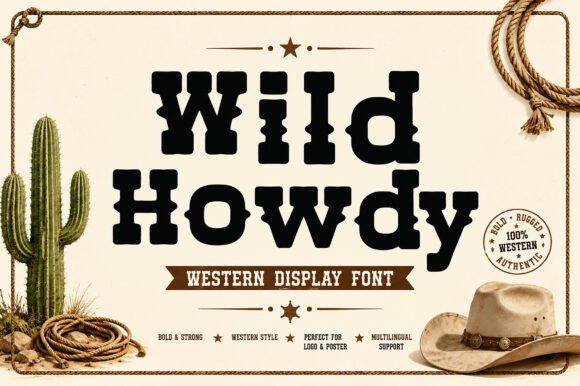
At its core, Wild Howdy is a display font with a distinct slab-serif structure. Think of the sturdy, blocky letterforms you’d see on an old wanted poster or a saloon sign—letters that are meant to be seen from a distance and command attention. The designers behind this typeface have injected a subtle, handcrafted imperfection into the forms, giving it a warmth and authenticity that rigid, digital fonts often lack. The thick strokes and strong verticals provide excellent stability, while the slightly irregular edges and terminals add a human touch. It’s a balance of strength and personality, making it far more versatile than a simple novelty font.
This isn’t a script font or a handwritten font trying to be casual; it’s a statement piece. The serif font elements are pronounced, creating a visual rhythm that feels both historic and energetic. When you use Wild Howdy, you’re not just choosing a style; you’re adopting a character. It’s perfect for projects where you want the typography to do some of the storytelling, instantly setting a scene of adventure, tradition, and rugged individualism.
Where the West Meets the Brief: Practical Applications
Understanding a font’s personality is one thing, but knowing where to apply it is where the real value lies. Wild Howdy excels in projects that need a strong, thematic anchor. For logo design, especially for brands in outdoor gear, BBQ sauces, craft breweries, or country music artists, it provides a foundation of trust and heritage. It tells customers, “We’re serious about our craft, and we have a story to tell.”
Beyond logos, its utility spans a wide range of creative and commercial work:
- Branding & Marketing: Use it for headline text on posters, flyers, and event branding for rodeos, county fairs, or western-themed festivals. It’s equally effective for packaging design on products like beef jerky, hot sauce, or artisanal goods, where shelf appeal is crucial.
- Digital & Social Media: In the crowded space of social media graphics, a bold, thematic font cuts through the noise. It’s ideal for creating eye-catching YouTube thumbnails, Instagram story headers, or Pinterest pins for travel blogs, DIY tutorials, or vintage clothing shops.
- Apparel & Merchandise: This is where Wild Howdy truly shines. It’s a natural fit for print-on-demand products like t-shirts, hats, and tote bags. The letterforms are built to be embroidered, screen-printed, or heat-pressed with clarity and impact.
- Editorial & Publishing: For book covers in the Western or historical fiction genre, magazine spreads about Americana, or chapter headings in a cookbook, it adds a layer of genre-appropriate sophistication.
The key is to match the font’s energy to your project’s goals. It’s not for body text in a legal document, but it’s the star of the show for any headline that needs to feel adventurous and dependable.
Pairing, Licensing, and Making It Work
A powerful display font like Wild Howdy works best when it’s part of a harmonious font pairing. Its strong personality needs a balancing act. For body copy or supporting text, pair it with a clean, neutral sans serif font or a simple, readable serif font. This contrast creates a clear visual hierarchy, allowing Wild Howdy to grab attention for headlines while the supporting text remains easy to read. Avoid pairing it with other decorative or highly stylized fonts, as this can create visual clutter and dilute the impact of both.
Before committing, always test the font in context. Set your actual headlines and see how the characters interact. Check the spacing and kerning—sometimes a small adjustment can make a big difference in polish. Review all the included styles and glyphs; a good creative font often includes alternates, ligatures, or stylistic sets that can add extra flair to your brand identity.
Finally, for any commercial use, confirm the licensing. A reputable commercial font will have clear terms that cover your intended use, whether it’s for a client project, merchandise for sale, or digital distribution. This ensures your design assets are legally sound and your work remains professional.
In the end, Wild Howdy is more than just a collection of glyphs. It’s a tool for designers, marketers, and creators who need to inject a specific, powerful aesthetic into their work. It helps build brand identity, ensures visual hierarchy, and creates immediate recognition. When your project needs to speak the language of the West, this premium font provides the vocabulary. It’s a practical, versatile, and character-rich addition to any designer’s toolkit, ready to help your next project stand out and tell a compelling story.